Find Your Numbers
Enter what's in your vial and the dose you take. You get the units to draw, marked on the syringe, with the math shown so you can check it.
Keep your numbers with you
You work out your draw once per vial. DepthVitals keeps it in front of you at every dose after that.
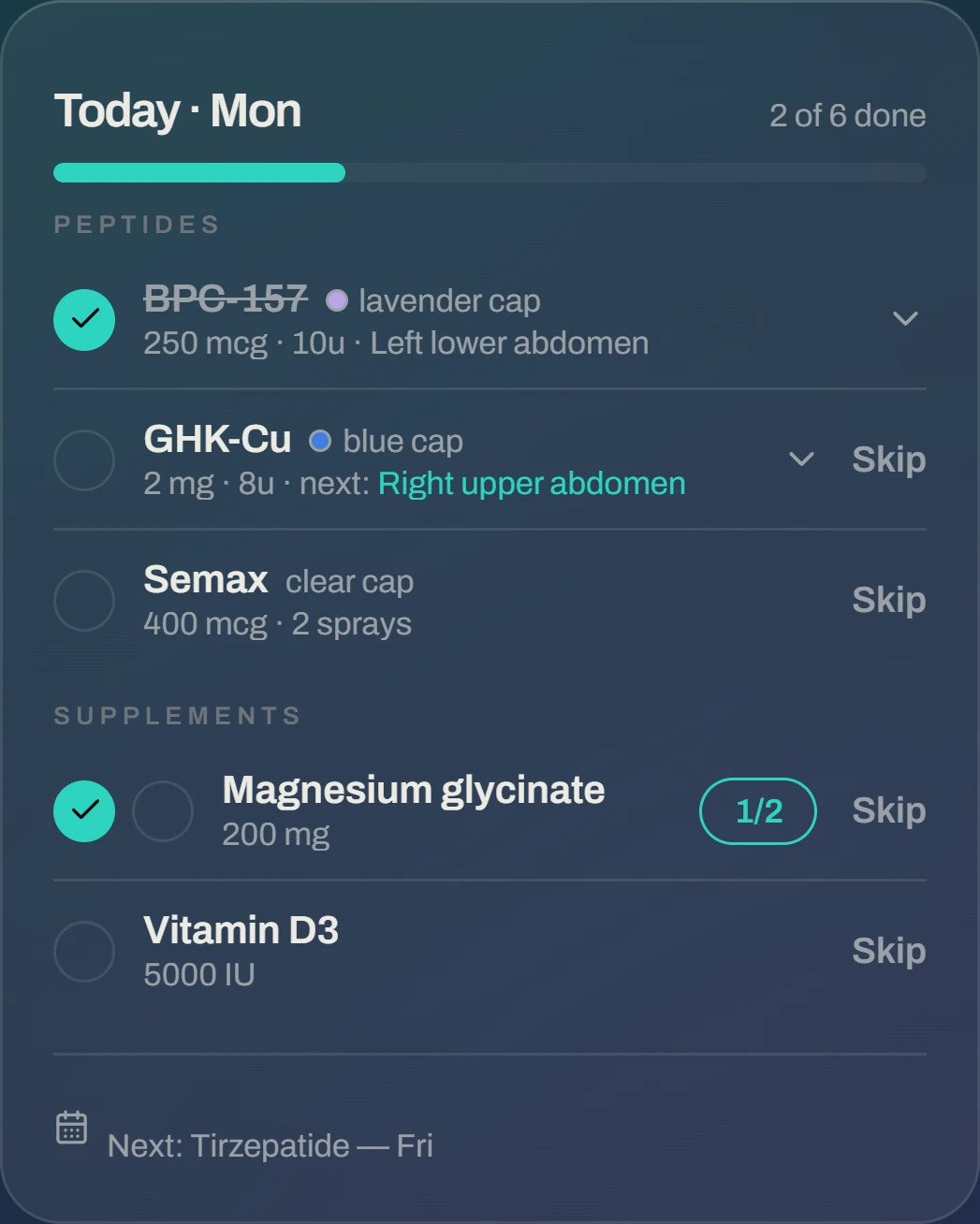
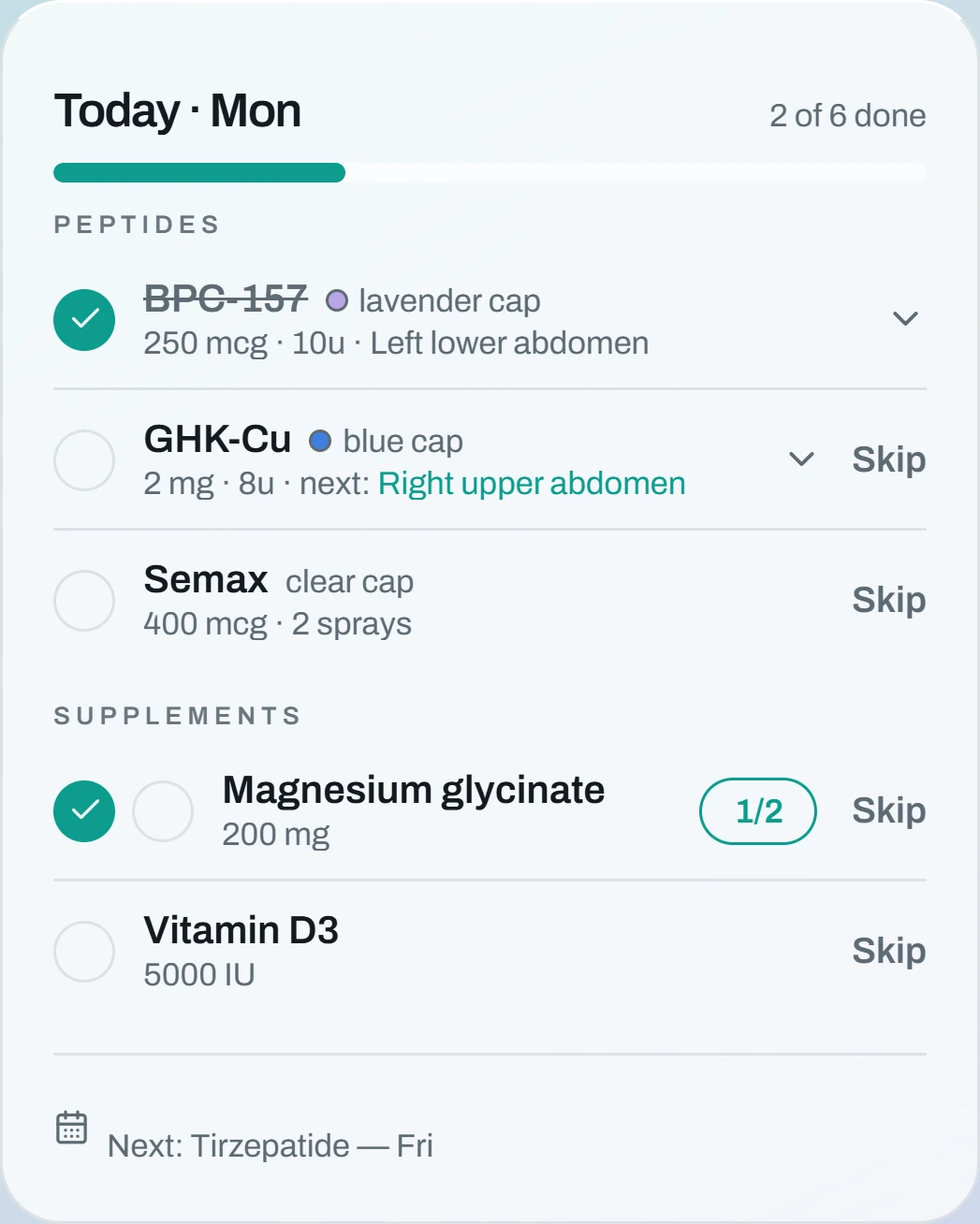
- Today shows your units. Each dose lists its draw, so the number is there when the syringe is in your hand.
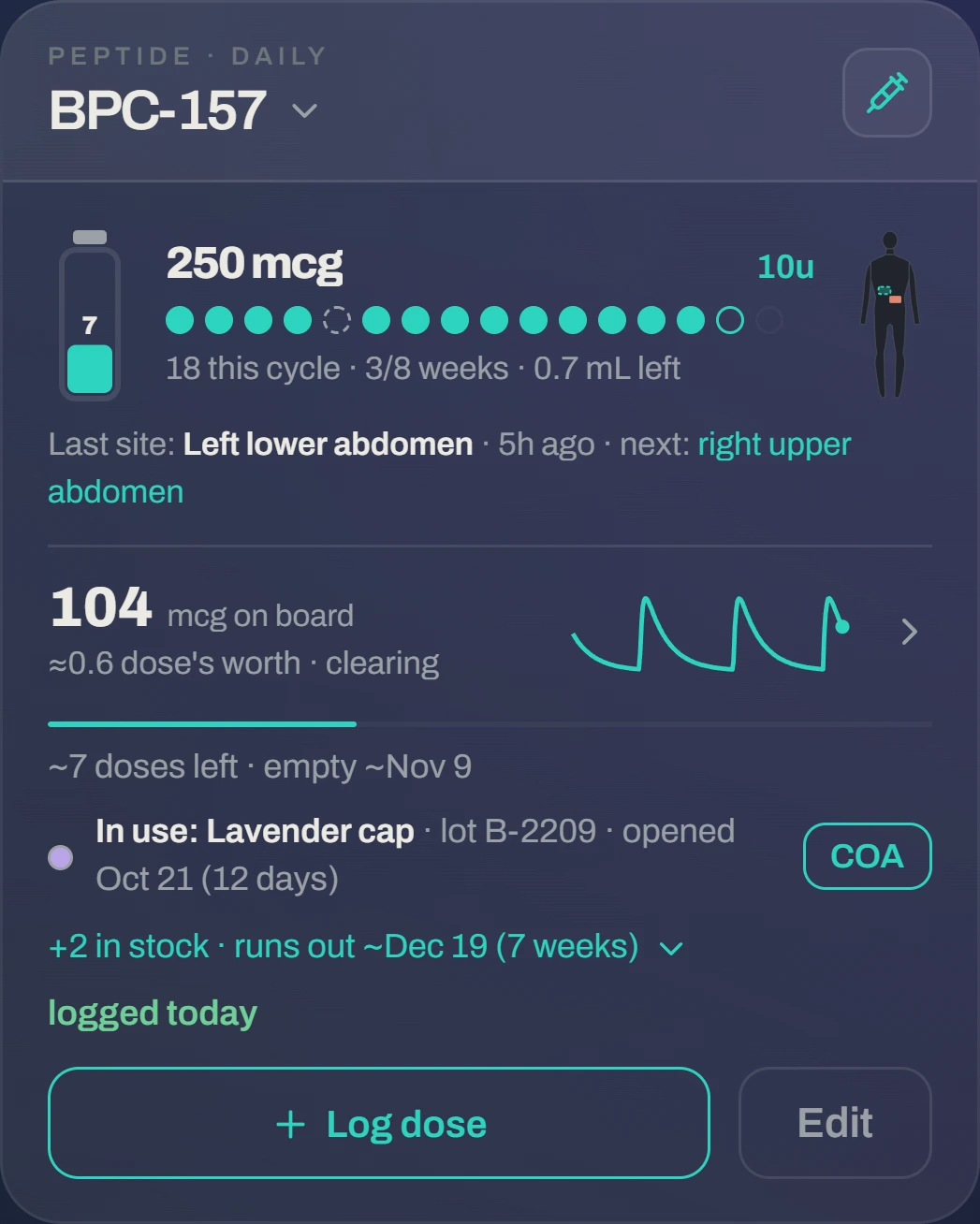
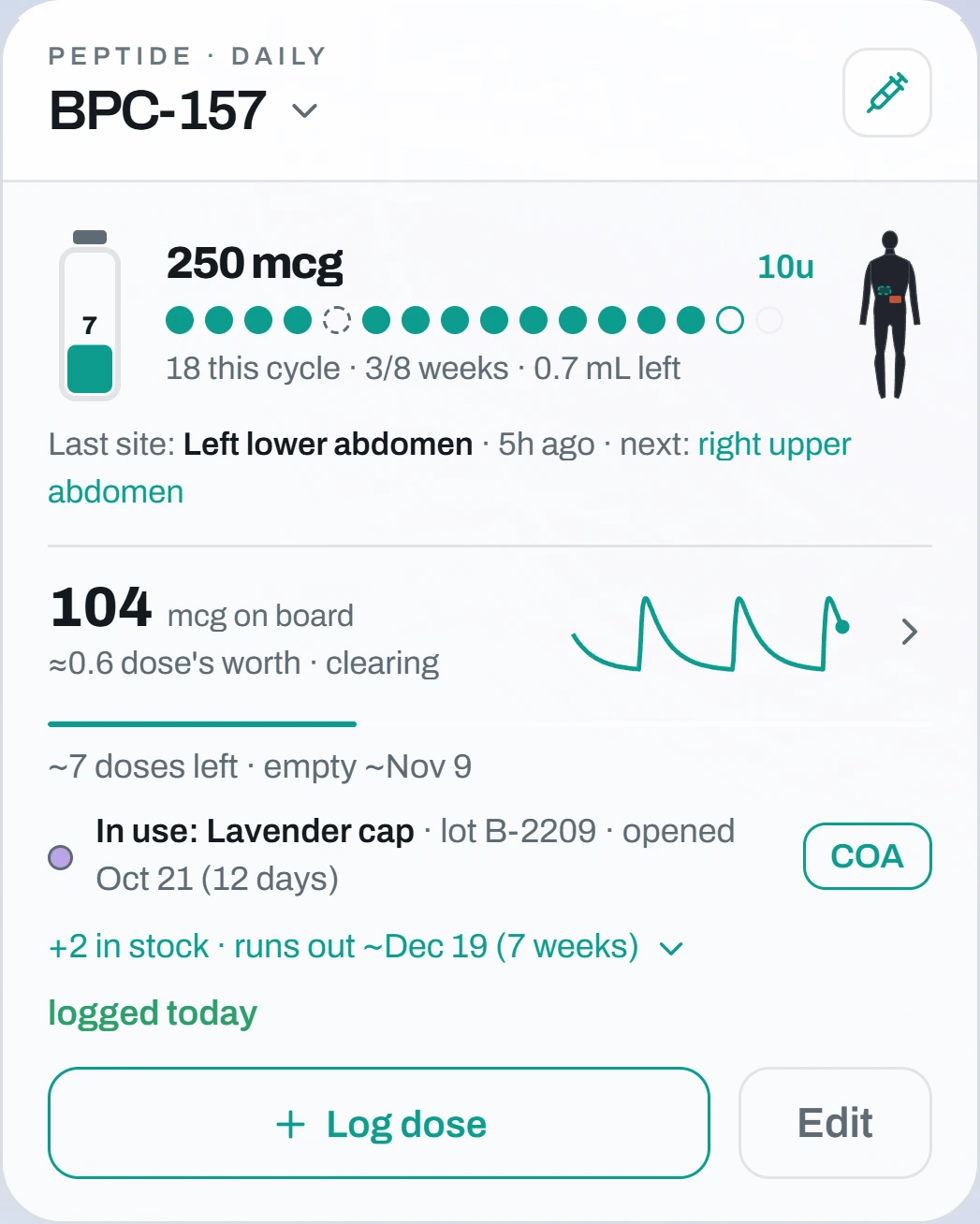
- The vial counts down. Every logged dose comes off the gauge, with doses left and a run-out date across your whole stock.
- The right vial, first try. Note the cap or crimp color on each lot, so the drawer stops being a guessing game.
- Sites rotate for you. A body map suggests the spot that has rested longest.
Before you draw
Which syringe do I need?
Insulin syringes marked U-100 hold 100 units per mL. They come in 30, 50 and 100 unit sizes (0.3, 0.5 and 1 mL). A smaller barrel spreads the same draw over more space, which makes small doses easier to read. Pick the size you use and the card draws it. The number of units is the same on all three.
mcg or mg?
1 mg is 1,000 mcg. A mix-up between the two moves the result by a factor of 1,000, so the card flags any dose that's larger than everything in the vial.
Does the kind of water change anything?
Only the amount does. 2 mL of bacteriostatic water and 2 mL of saline give the same units. If you used some of each, add them together. More water means a bigger draw for the same dose.
What about blends?
Add each compound with its mg, up to six. Then choose whether your dose is for the whole blend or for the first compound, and the card shows what every draw gives you of each one.
Pens and nasal sprays?
A pen dials in clicks of 0.01 mL, so the card shows clicks. For a spray bottle, enter how much each spray holds (0.1 mL is common) and the card shows sprays per dose.
Is this medical advice?
No. It does arithmetic on the numbers you enter and shows its work. Check the result yourself, and talk to a clinician you trust when you can.